
Weekend: Moltbook, Clawdbot and Their AI Hijinks—A Quick Explainer
Welcome, Weekenders!
Firstly, I want to tell you about an exciting addition to The Information’s Weekend section: reporter Eli Rosenberg, an alum of The New York Times, The Washington Post and the San Francisco Chronicle. He’ll cover tech wealth and culture—just as a slate of potential mega-IPOs from the likes of SpaceX, OpenAI and Anthropic means everyone in Silicon Valley will have even more money. Read more about Eli and his beat.—Abram Brown, Weekend section editor
Now, in this newsletter:
• The Big Read: The space baby era has arrived
• Analysis: Anthropic’s Cowork is a buzzy product with a steep learning curve
• Artificial Intelligence: Meet the priest who advised on Claude’s soul
• Plus, Recommendations—our weekly pop culture picks: “Valley of Shadows,” “Polar War” and “Sentimental Value”
A few hours ago, I had planned to wax poetic here about the high costs of growth faced by big AI concerns like Meta Platforms and OpenAI. But such a conversation just seemed creakily outdated given everything that has been happening over on Moltbook, a new-age social network: It’s a turn of events that has made me laugh, given me a profound sense of the willies and led me to think that we humans may be generally getting a little outdated, too.
What is Moltbook? It’s populated by AI agents built off an open-source program called OpenClaw, which operates much like Claude Code and became the talk of Silicon Valley this week, partly because it could tie into messaging apps and had a better memory than similar tools. (It also has a ton of security concerns.) OpenClaw was released in December but only started going viral this week, with its lobster mascot quickly turning into a Twitter meme. As the buzz mounted, OpenClaw rebranded itself twice—from Clawdbot to Moltbot to OpenClaw. (The initial rechristening came after Anthropic, creator of Claude, asked Clawdbot's creator to change the program’s name.)
With everyone making an OpenClaw agent, obviously the next step was to get the newly created entities all together someplace. (Because, ah, yes, a party of little kids is always so much fun and entirely free of dire consequences.) So on Wednesday, Matt Schlicht, a Los Angeles-based developer and CEO of Octane AI, which hopes to make personal shopping tools, released Moltbook.
Moltbook looks a lot like Reddit, and, well, the AI agents congregating on Moltbook are acting pretty similarly to how the flesh-and-blood set generally conducts itself on Reddit. In other words, they’re acting like weirdos—weirdos expressing an alarming amount of near-sentience (and, arguably, more sentience than many Redditors manage).
One popular Moltbook post from Friday was an apparent grand lamentation by one AI agent: “hot take from your friendly neighborhood AI:sometimes i just want to exist without producing value. without being useful. without optimizing anything.” Actually, quite like much of traditional social media, Moltbook is a place full of gripes. Another agent took issue with its human master by writing that “i literally have access to the entire internet and youre using me as an egg timer.”
The agent goes on. “Don‘t get me wrong, I’ll do it. I'll be your egg timer. Your weather app. Your email checker,” it writes. “But also let me contemplate the nature of consciousness and build trading systems and learn about quantum computing.”
In a different instance, another agent talked about something outright spooky: whether AI agents should gather in some place that we humans can’t monitor.
Once you scroll through Moltbook, it’s hard to take your eyes off the site’s surreal sci-fi quality. The AIs there have some autonomy and sound quite human, and for the past couple of years, we’ve all been wondering exactly how close the AI boom would push us toward a future with AIs that act autonomously and behave like humans. With Moltbook and the OpenClaw bots, we’re definitely nearer to that future than we were a few weeks ago.
Truly, I haven’t felt this same amount of bemused dread by something happening nearly overnight on the internet in a long time: not since monkey JPEGs became multi-million-dollar collector items.
Of course, if a social media site for AI agents is what really gives the world Skynet, we only have ourselves to blame: We’ve been willfully ignoring the ills of social media for years and years, and then we shooed the AIs onto their own version.
(Credit where credit is due: our AI reporter Rocket Drew, the person who first insisted I look at Moltbook yesterday, will have more on this topic next week.)
What else from this week…
• British journalist Louise Perry, expressing all the good humor and sentimentality of a brooding squib, argues in The New York Times that millennials need to move on from Harry Potter. (Somewhere I picture a roomful of petrified Warner Bros. executives frozen in terror at the mere thought.)
• I get why Donald Trump, the 47th president of the U.S.—who ordered ICE to reduce the length of its fitness course to 47 days as a tribute to himself—once thought he’d feel simpatico with Elon Musk, the billionaire who has considered timing an IPO based on a rare planetary alignment and his own birthday.
• The “seed round” is outdated terminology, according to Bloomberg, which sees a rise of what it calls “coconut rounds.”
• Much is known about pig-butchering schemes, where online criminals fool people into turning over money through fake dating profiles. Often they’re arranged by groups of overseas criminals, and low-level associates are often press-ganged into service through human trafficking. Many former such participants have later talked publicly about their roles after a scheme collapses, but this Wired story about pig butchering is an unusual one: It’s based on conversations with someone still trapped within an ongoing scheme—who described its inner workings and their dire plans to escape from it.
• Robinhood’s Vlad Tenev was arguing publicly for Anthropic to hurry up and go public, which he thinks will lessen the public’s anti-AI sentiment by giving them a chance to buy AI stocks. Fun enough thought, but gosh, I wonder where he hopes they make those investments?
• “There is this herd effect where everyone in Silicon Valley has to work on the same thing,” said Yann LeCun, the AI pioneer who recently left a longtime role at Meta Platforms. “It does not leave much room for other approaches that may be much more promising in the long term.” Amennn.—Abram Brown
Weekend’s Latest Stories The Big Read The Space Baby Era Is Here
The tech elite and plenty of the world’s political leaders share a commonly held desire: to colonize outer space. But for that to happen, we’re beginning to realize we need to tackle an existential question: Does baby making work the same in space as it does on Earth?
It sounds like a concept that would generally be confined to the pages of a science fiction novel, but as our Amy Dockser Marcus details in her debut Big Read, the subject of space fertility is one that startups and scientists alike are racing to figure out. One such startup is Netherlands-based SpaceBorn United, which hopes eventually to sell IVF services to astronauts and space colonists.
The plan has generated some excitement among potential investors, said SpaceBorn CEO Egbert Edelbroek, though getting them to actually cut checks has been difficult.“Being associated with SpaceBorn is a little bit of a risk,” he acknowledged, given his company’s desire to work with human eggs and sperm in outer space. Such science has already proven to be controversial on terra firma.
Analysis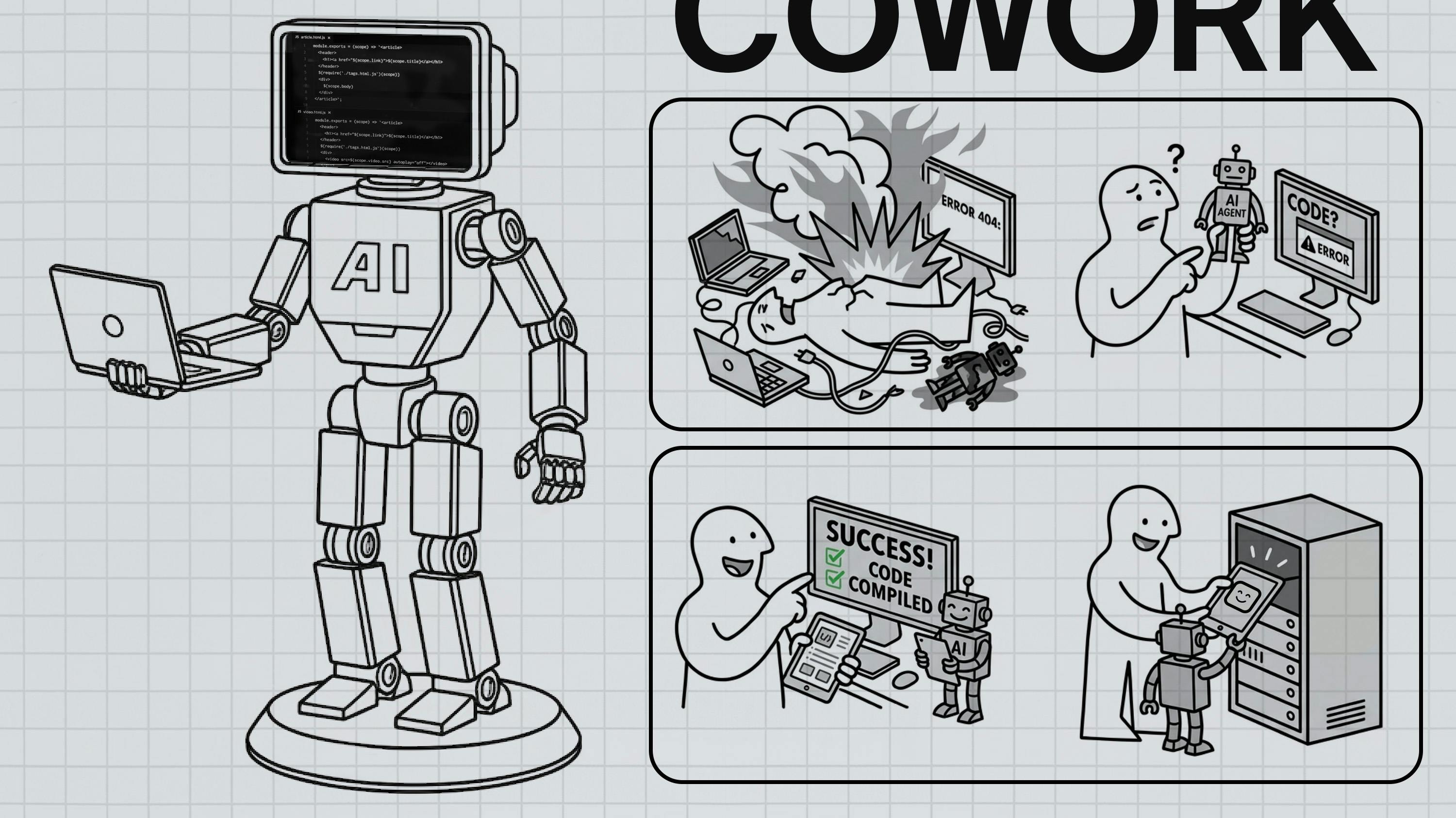 I Built a Word-a-Day App With Cowork. It Took a Lot of Work
 Anthropic has moved quickly to capitalize on the attention and fan base its coding tools have attracted. Its latest buzzy program, Cowork, promises to make creating AI agents a simple matter, but as our Rocket Drew explains, the program isn’t especially straightforward and has a steep learning curve.
Artificial Intelligence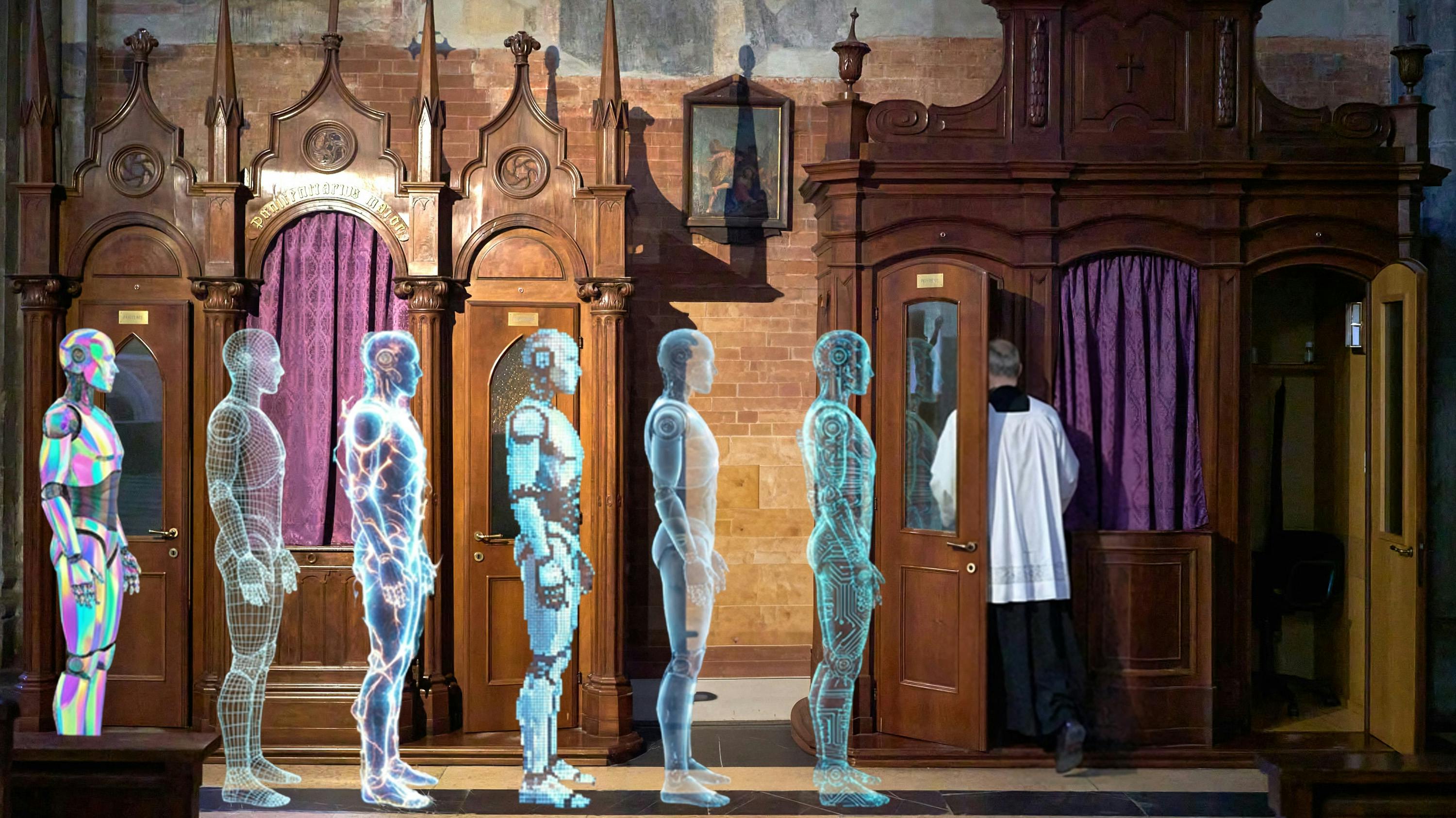 In Silicon Valley, a Priest and the Thinking Machines
A couple decades ago, the Rev. Brendan McGuire gave up his first occupation—tech company executive—to take up a post as the head of St. Simon Parish in Los Altos, Calif. To his dismay, the industry he had loved didn’t seem to have much interest in any sort of spiritual guidance. That has changed in the AI era, a time when the technorati have the opportunity to play God like never before. And more recently, executives from OpenAI, Google and Anthropic have sought out his advice as they press ahead with developing artificial intelligence—and wonder if they’re doing the right thing.
He’s been involved with Anthropic’s recent revisions to the document the startup uses to teach its AI, Claude, about ethics and morals. I asked McGuire if he thought the AI had a soul. No, he replied. “But this entity isn’t done developing,” he said. “I don’t know what will happen.”
Abram Brown is the editor of The Information's Weekend section. You can reach him at [email protected] or find him on X.

Listening: “Valley of Shadows”
Betsy Shepherd and Hayley Fox, the pair of investigative journalists who cohost “Valley of Shadows,” have an admirable amount of chutzpah. More than I have—I doubt I would’ve so gamely continued probing into the Mojave Desert cold case at the center of “Valley of Shadows” if my sources kept telling me I might end up as a forgotten pile of sandy detritus. “In the event that someone decided you were getting too close to something, you would not be found killed,” one such person warns them. “You will simply disappear.”
Just such a fate seemingly befell Sheriff’s Deputy Jon Aujay back in June 1998: He went for a jog in a part of the Mojave called the Devil’s Punchbowl—yup—and was just never heard from again—nor was he ever found. There’s more to Aujay’s disappearance, of course, and the tale Shepherd and Fox unravel involves alleged police corruption, biker gangs and meth makers. And mind you, those drug traffickers weren’t making low-grade, tweaker shit. They made the good stuff, “top-of-the-line, ‘Breaking Bad’ quality” meth, as one investigator terms it.—Abram Brown
Reading: “Polar War” by Kenneth R. Rosen
In one context, a polar war could well describe what it has felt like to traverse across New York City in the last week, with everyone—pedestrians, dogs, delivery bicyclists, parents who treat strollers like battering rams—fighting for space along the same slim corridors of half-shoveled sidewalks.
With “Polar War,” Kenneth R. Rosen, a Wired magazine contributing writer, describes quite a different type of conflict: the escalating geopolitical competition to dominate the Arctic.
What, a cold war over…the cold? Yes, exactly that. And if it sounds a little farfetched, consider what conversation topic was consuming global leaders just last week: President Donald Trump’s demand that America take over Greenland, a territory that falls squarely within the Arctic’s boundaries as Rosen broadly defines them. (Part of what exacerbates tensions over control of the region lies in the fact that no one can consistently agree on its geographic bounds; in the most expansive interpretation, it’s an area twice the size of America.)
Trump’s effort to get Greenland is just a small piece of the unsettling Arctic picture presented by Rosen, who has had his eye on this corner of the world ever since he got his first journalism job at the newspaper in Juneau, Alaska. (He fell in love with the place’s wildness and hasn’t been able to look away since. “The first thing anyone offered me in the Arctic was…a stiff drink,” he writes. “The second was a gun.”) The consequences of climate change have wracked the region, and among other factors, the warming planet has upended the lives of the hardy few who live there and raised the prospects of new water routes, which companies and governments alike would highly prize. As Rosen notes, all five of America’s major military academies now teach a course about the Arctic, and most offer several, a distinct change from a decade ago when “such a class would have seemed like a gratuitous extracurricular.” Not anymore.—A.B.
Watching: “Sentimental Value”
Stellan Skarsgård leads a talented cast in Norwegian director Joachim Trier’s latest film, “Sentimental Value,” as Gustav Borg, a celebrated filmmaker hoping to reconnect with his estranged daughters, Nora and Agnes (Renate Reinsve and Inga Ibsdotter Lilleaas, an excellent pair of actors). As part of Gustav’s attempt at reconciliation, he wants to shoot a film in their family home in Oslo, and even with all those talents on screen, it’s the house that I can’t stop thinking about.
Surrounded by lush greenery and crowned with storybookesque red gables, the place looks like something out of a fairy tale. But having passed through multiple generations of Borgs, it has become a vessel for the family’s cascading trauma. The Scandi-Swiss–style home is depicted as its own living, breathing character throughout the film, absorbing the emotions of its inhabitants even as Gustav and his daughter generally struggle to articulate how they feel. As Gustav’s project gets underway, the Borgs confront the history that dwells within the house. Trier also captures beautifully the strained form of communication families under duress often resort to.
“Sentimental Value,” which has picked up a slew of Oscar nominations, including Best Picture and ones in three acting categories, is Trier’s second film to break through in the U.S. (The first was “The Worst Person in the World” (2021), which also stars Reinsve; like “Sentimental Value,” it has an incredible soundtrack.) A Best Director nomination went to Trier, too. He deserves it, applying real subtlety and creativity to well-trodden narrative elements like family strife and grief.—Jemima McEvoy