
Virtual Cards Bring Flexibility to SMB Payments Stuck in the Past
Business payments are poised for modernization as the entrenched position of cash and checks will be whittled down by digital, flexibility methods of small business payments.
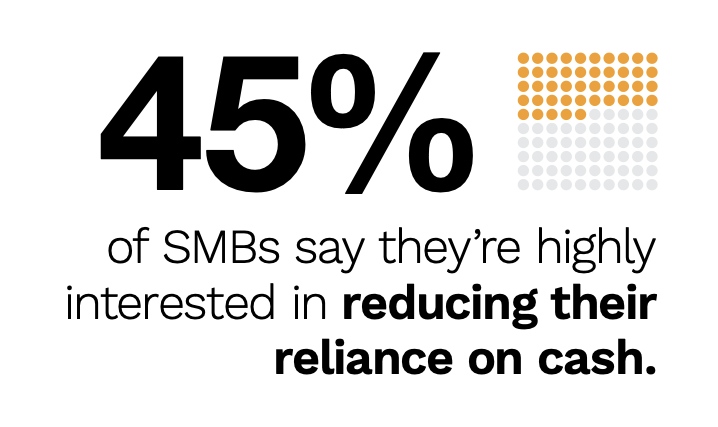
The February PYMNTS Intelligence report with Mastercard, “Ready for Change: Why Nearly Half of SMBs Want to Ditch Cash and Checks,” finds nearly half of small and medium-sized businesses (SMBs) are highly interested in reducing their reliance on cash even as legacy methods continue to dominate key workflows. The report is based on a survey of 412 U.S. SMB owners and executives conducted from Dec. 2 to Dec. 20, 2025.
Cash and Checks Still Dominate Daily OperationsCash retains a prominent role in day-to-day activity, particularly among younger operators and smaller firms. Among Gen Z-owned businesses, just over half of payments are made in cash. This reliance reflects immediacy. Cash supports in-person transactions, rapid turnover and tight liquidity management in sectors such as restaurants and personal services.
Checks persist for a different reason. They remain embedded in structured business processes. Firms that have operated for decades, particularly those with higher revenues and established vendor relationships, continue to rely on checks because they fit invoicing cycles, approval chains and recordkeeping practices. Among businesses operating for at least 20 years, 54% of payments are made via checks.
Who Uses Them and Why They PersistPatterns of usage vary sharply across segments. Younger owners lean heavily on cash, while baby boomers and larger SMBs show greater dependence on checks. Rural businesses, microbusinesses and consumer-facing firms also show elevated reliance on cash, often due to limited access to credit products and customer payment preferences.
These methods endure not because businesses reject digital alternatives, but because they align with operational realities. Costs and fees associated with cards, supplier preferences for cash or checks and the complexity of reconciling digital payments with existing bookkeeping systems all reinforce the status quo. More than one-quarter of SMBs cite cost as a barrier to reducing cash usage, while others point to habit and convenience tied to their business model.
Virtual Cards Gain Ground in Core Use CasesMovement toward digital payments is most visible where business credit cards and virtual cards solve specific problems tied to control and risk.
The leading use case is dispute resolution, cited by 63% of SMBs, followed by the ability to make payments without having cash on hand at 59%. These capabilities highlight the advantage of digital tools in managing uncertainty and preserving liquidity.
Four areas illustrate where digital methods are gaining traction. Dispute protection and refunds stand as the most cited benefit at 63%. The ability to manage liquidity without immediate cash follows at 59%. Paying suppliers more quickly is cited by just over half of SMBs, while roughly 42% point to improved visibility into available funds.
These are not incremental improvements. They address core operational pressures. Virtual cards, in particular, extend these benefits by adding control over spending, enhancing security and enabling more precise tracking of transactions.
Adoption, however, remains uneven. Larger SMBs, retail firms and businesses in urban markets are more likely to treat cards as a central operating tool. Smaller and rural firms continue to require more support and face greater friction in adopting digital workflows.
Replacing checks requires more than digitization. It requires matching the control, predictability and familiarity that checks and cash continue to provide, while offering measurable gains in efficiency and risk management.
At PYMNTS Intelligence, we work with businesses to uncover insights that fuel intelligent, data-driven discussions on changing customer expectations, a more connected economy and the strategic shifts necessary to achieve outcomes. With rigorous research methodologies and unwavering commitment to objective quality, we offer trusted data to grow your business. As our partner, you’ll have access to our diverse team of PhDs, researchers, data analysts, number crunchers, subject matter veterans and editorial experts.
The post Virtual Cards Bring Flexibility to SMB Payments Stuck in the Past appeared first on PYMNTS.com.