
A Step-by-Step Guide to Tokenizing Real Estate Assets on the Blockchain

Real estate tokenization is a process that converts ownership of a physical property into digital tokens secured on a blockchain. These tokens can represent various rights such as equity stakes, profit shares, or debt claims linked directly to a real-world asset.
For startups, investment platforms, and property developers, tokenization presents a modern fundraising strategy. It removes traditional barriers to investment, streamlines ownership processes, and opens access to global capital while introducing transparency and efficiency.
Conventional real estate deals are often slow, involve multiple intermediaries, and are geographically constrained. Tokenization changes that by enabling:
- Fractional property ownership accessible to a wider investor pool
- Instant transfers that replace long administrative cycles
- Automated distribution of rental income
- Blockchain-based trust with verifiable transactions
This guide walks you through each step of the tokenization process while combining legal, technical, and operational elements. Whether you are a founder or a fund manager, this framework will help you harness blockchain to modernize real estate investment.
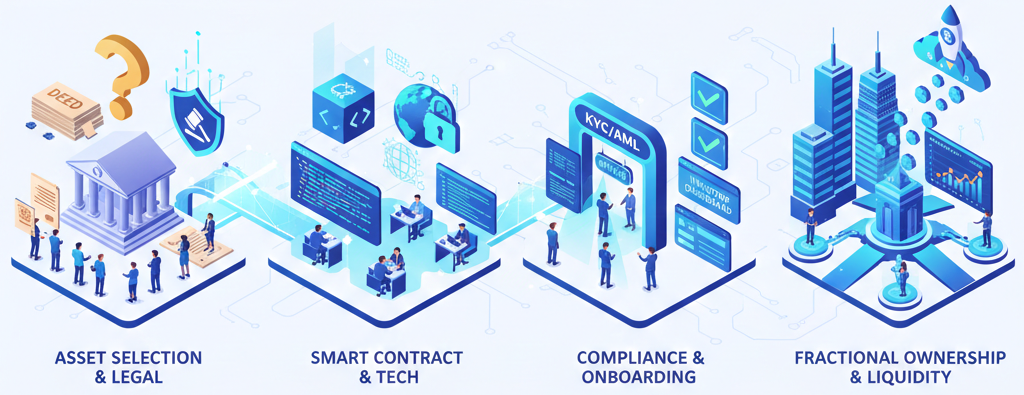 1. What Is Real Estate Tokenization
Tokenization is not simply digitizing a property or uploading a deed to the blockchain. It is a multidisciplinary approach that merges legal structures, financial instruments, and smart contracts to digitally represent ownership rights.
Common Token Use Cases- Equity in a legal entity often an SPV that owns the property
- Revenue sharing rights to a portion of rental or operating income
- Debt claims such as tokenized loans or bonds backed by real estate
- Usage rights such as access to the property or related services
- Hybrid models that combine ownership and income benefits
- Raise capital without selling full ownership
- Offer fractional shares such as a 100 dollar minimum investment
- Digitize and simplify recordkeeping
- Reach international investors
- Automate financial flows and ownership updates
Understanding the mechanics of tokenization is the foundation for all the steps that follow.
2. Choosing the Asset and Legal SetupBefore writing code or selecting a blockchain, focus on the asset and legal structure.
Asset SelectionChoose a property with:
- Clear legal title
- Verified income or growth potential
- Full due diligence completed just as you would for a conventional investment
Since direct tokenization of deeds is not legally viable in most jurisdictions, legal wrappers are used
- Special Purpose Vehicle SPV A company holds the asset and tokens represent fractional equity
- Trust structures A trust owns the asset and tokens grant beneficiary rights
- Real Estate Investment Trust REIT like models Tokenized units mirror REIT mechanisms
Tokens can stand for:
- Equity in the SPV
- Rental income rights
- Secured debt
- Blended rights such as profit sharing and capital ownership
This legal alignment ensures that token holders have enforceable rights and that the offering meets local compliance standards.
3. Selecting the Blockchain and Token StandardYour choice of blockchain will affect everything from gas fees to future investor adoption.
Popular Chains for Tokenization- Ethereum and Layer 2s such as Arbitrum Base Optimism for strong community and high liquidity
- Polygon for low transaction costs and EVM compatibility
- Solana Aptos or Sui for high throughput and retail investor scaling
- ERC20 Best for fungible tokens representing fractional units
- ERC3643 also known as T REX Designed for compliance with security regulations
- ERC1155 Supports semi fungible tokens useful for tiered ownership
Ensure the blockchain and token format align with long term goals such as institutional integration or secondary market access.
4. Building the Smart Contract ArchitectureThis is where blockchain development starts by creating the code that governs token behavior.
Sample ERC20 Smart Contract// SPDX-License-Identifier: MITpragma solidity ^0.8.0;
import "@openzeppelin/contracts/token/ERC20/ERC20.sol";
import "@openzeppelin/contracts/access/Ownable.sol";
contract RealEstateToken is ERC20, Ownable {
constructor() ERC20("RealEstateToken", "RET") {
_mint(msg.sender, 1_000_000 * 10 ** decimals());
}
function distributeRevenue() external payable onlyOwner {
uint256 supply = totalSupply();
require(supply > 0, "No tokens issued");
for (uint256 i = 0; i < holders.length; i++) {
address user = holders[i];
uint256 portion = (balanceOf(user) * msg.value) / supply;
payable(user).transfer(portion);
}
}
}
This is a simplified example. In a real production environment, you should optimize for gas, index holders properly, and use batch payouts.
Key Decisions Before Coding- Token supply How many tokens will represent the full property value
- Income distribution Will it be automatic or managed manually
- Transfer controls Are tokens tradable and are there holding restrictions
- Resale conditions Will tokens be listed on secondary markets
Before launching to a live network, thoroughly test your smart contracts.
Testing Tools- Hardhat Foundry or Truffle for local testing environments
- Testnets such as Goerli or Mumbai for predeployment simulation
const Token = await ethers.getContractFactory("RealEstateToken");
const token = await Token.deploy();
await token.deployed();
console.log("Token deployed to:", token.address);
}
main().catch((error) => {
console.error(error);
process.exit(1);
});
Testing helps ensure all features like transfers and compliance restrictions function correctly.
6. Compliance KYC and Regulatory AlignmentReal estate tokens often fall under securities laws. Compliance should be embedded into the technical stack.
Compliance Features- Investor verification such as KYC and AML
- Whitelist based transfers
- Jurisdictional restrictions
- Lock up periods depending on asset type
- Accredited investor verification
require(kycRegistry[user], "User not verified");
_;
}
Compliance is key for legal safety and investor trust.
7. Token Distribution and Investor AccessOnce compliance is in place, tokens can be issued to investors.
Components to Consider- Investor dashboard showing balances and earnings
- Wallet integration either non custodial or managed
- Automated rental income tracking
- Backend systems for syncing on chain and off chain records
Optional features include tax documentation, mobile apps, and property performance analytics.
8. Enabling Liquidity Through Secondary MarketsLiquidity is one of tokenization’s most compelling benefits.
Options for Liquidity- Listing on compliant exchanges for security tokens
- Peer to peer transfers with smart contract enforcement
- Buyback programs for token redemption
- Automated liquidity pools for property tokens still emerging
Liquidity increases investor confidence and improves the attractiveness of your offering.
9. Security Must Be a PrioritySecurity breaches can jeopardize investor funds and your legal standing.
Smart Contract Security- Use audited libraries such as OpenZeppelin
- Avoid untested or unnecessary custom logic
- Apply access control and permission layers
- Conduct internal and external code audits
- Protect APIs databases and admin panels
- Secure private keys using hardware wallets or MPC
- Implement multisignature wallets for high privilege actions
- Ensure only verified users can interact
- Monitor transactions for suspicious activity
- Keep logs for audits and legal reviews
Do not overlook security even if your property is a sound investment.
10. Preparing for LaunchA successful launch builds confidence among your early investors.
Prepare the Following- Property valuation and supporting reports
- Smart contract audit summaries
- Investor risk disclosures
- Tokenomics and issuance details
- Highlight liquidity and fractional access
- Show transparency using on chain data
- Provide a smooth onboarding experience
- Educate users on rights and limitations of their tokens
Tokenized real estate is already being used for:
- Commercial buildings and office towers
- High end residential properties
- Income generating apartments
- Resort and hospitality assets
- Land for development
These examples show that tokenization is no longer a concept. It is now a practical and scalable financial model.
ConclusionTokenizing real estate provides an opportunity to modernize property investment by making it more accessible, liquid, and transparent. When legal compliance, smart contract engineering, and investor experience come together, tokenization can drive scalable capital formation.
Whether you are a founder or asset manager, understanding the full process is critical for launching a successful and compliant offering.
If your organization is exploring tokenization, Ancilar provides end to end Web3 solutions including legal setup, smart contract design, compliance features, investor dashboards, and launch support.
We help bridge the gap between traditional assets and blockchain based investment products.
A Step-by-Step Guide to Tokenizing Real Estate Assets on the Blockchain was originally published in Coinmonks on Medium, where people are continuing the conversation by highlighting and responding to this story.