
Blue Origin sets late February launch for third New Glenn mission
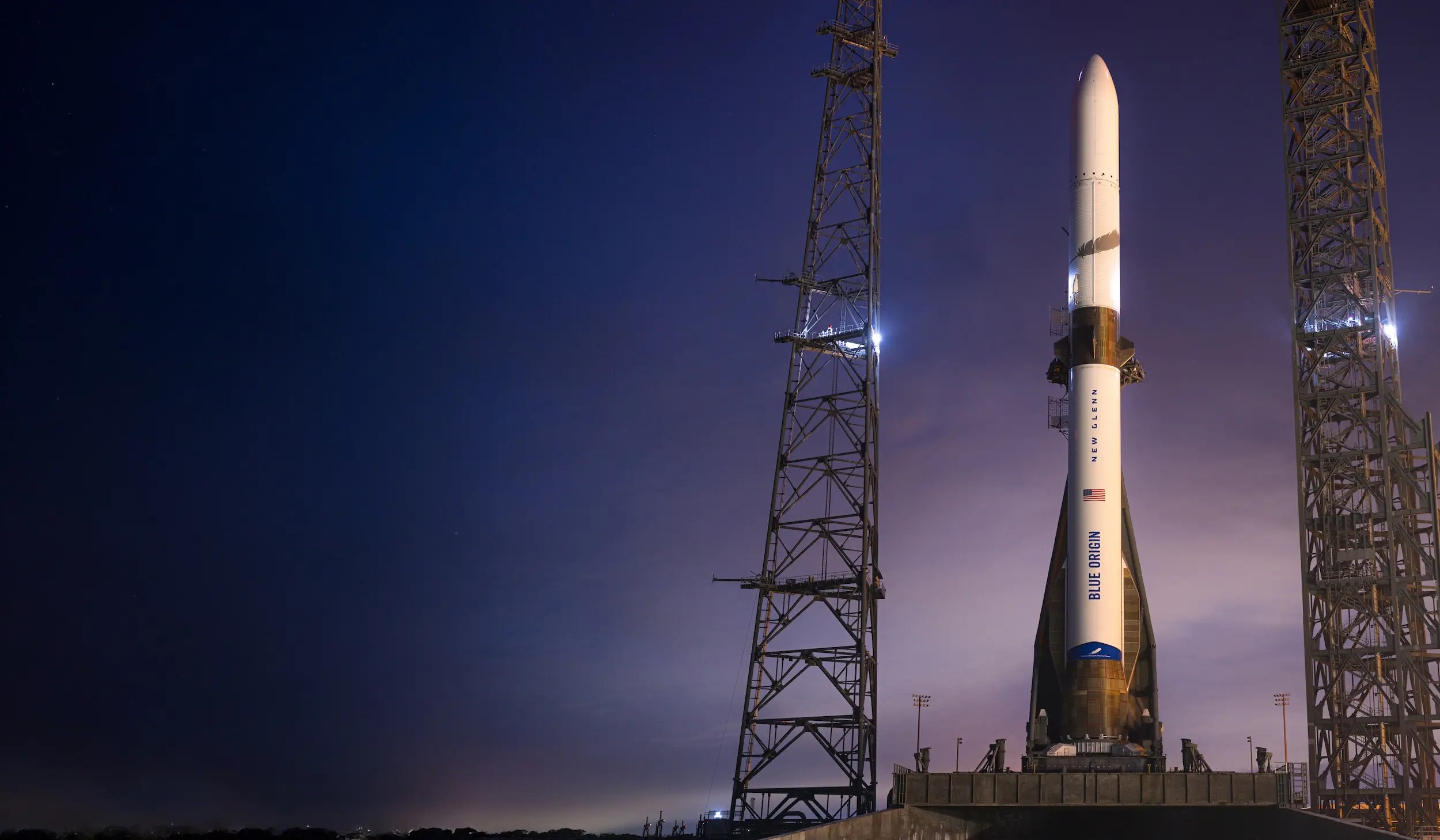
Blue Origin scheduled the third launch of its New Glenn rocket for late February, carrying an AST SpaceMobile satellite to low-Earth orbit. This marks the second commercial payload for New Glenn and follows a decade of development.
The company did not elaborate on the decision to launch the AST SpaceMobile satellite instead of its Blue Moon Mark 1 (MK1) robotic lunar lander, which is undergoing vacuum chamber testing at NASA’s Johnson Space Center in Texas. A launch date for the lunar mission has not been set.
This upcoming launch represents the third New Glenn mission in just over a year, with the booster stage from the rocket’s second mission in November being reused. Blue Origin recovered that booster via a drone ship landing, consistent with SpaceX’s Falcon 9 recovery methods.
New Glenn serves as Blue Origin’s primary vehicle for delivering payloads to Earth orbit and beyond, expanding upon the company’s New Shepard suborbital rocket program. The agreement with AST SpaceMobile involves sending multiple satellites into orbit to facilitate the development of a space-based cellular broadband network.
February is a busy month for spaceflight, with potential launches including NASA’s Artemis II crewed lunar orbit mission as early as Feb. 6, SpaceX’s testing of the third Starship rocket version, and the NASA/SpaceX Crew-12 mission to return the International Space Station to full staffing after the medical evacuation of the Crew-11 team.
Blue Origin’s broader initiatives include a super-heavy New Glenn variant, announced in November, which will exceed the height of a Saturn V rocket. On Wednesday, the company disclosed plans for a satellite internet constellation, TeraWave, with deployment commencing in late 2027. Future ambitions for Blue Moon landers include missions to the Moon and Mars, alongside the development of Blue Ring, a spacecraft designed to host and deploy payloads for other space companies.