
AI and the Ro Khanna Trap
Welcome, Weekenders! In this newsletter:
• Predictions 2026: Sutskever’s fate, OpenAI’s next acquisition, the next hit robot—and 12 more things we think will happen in 2026
• The Arena: Sportswear brands face an inflection point
• Plus, Recommendations—our weekly pop culture picks: “Fela Kuti: Fear No Man,” “The Breath of the Gods” and “Wake Up Dead Man”
Ah, another new year has arrived. What possibly could the future hold—what staggering unexpectedness will befall us in the 11 months, 28 days and 14 hours ahead? What will occupy our feeds, our minds?
Ok, I can get real: I think only two things really matter in 2026, and yes, they overlap. AI is one, and the other is the outcome of the midterm elections, a battle that may echo the recent discourse involving Rep. Ro Khanna, Silicon Valley’s Democratic Congressman, and a California proposal for a new billionaire tax.
I probably don’t need to emphasize to anyone reading this column why AI matters so much, since it is not just the beating heart of tech innovation, it really is the entire damn American economy, and every day seems to bring another number demonstrating that point. Like, for instance, this new Goldman Sachs research that shows Wall Street now expects nearly $530 billion in AI capital expenditures in 2026, almost 70% more than the projection for 2026 from a year ago. (Frankly, I’m still thinking about Harvard economist Jason Furman’s recent number crunching, which found that AI spending contributed 92% of America’s GDP growth in the first half of 2025.)
I bring up all these figures to illustrate the sense that sorta hangs in the air around Silicon Valley as everyone at the office gets ready to log back on: If the energy around AI diminishes even in the slightest, plenty of Americans will feel considerable economic pain. For many in tech, such a moment would feel about as comfortable as sitting in a roaring hearth.
With AI such a dominant force in America, politicians and voters alike will make it a top issue in November, and since the tech elite often display a sense of capitalistic pragmatism, I’m sure the industry will want to safeguard the enormous sums put behind AI by wooing both parties with donations, tilting back from its rightward, pro-Trump shift in 2024. As a matter of fact, I expect we could witness a pretty dramatic emergence of tech Democrats, especially since the party that hasn’t occupied the White House has fared well in every midterm since 1994.
Just how strongly tech reembraces the left really comes down to whether Democratic leaders act like pragmatists themselves—and avoid falling into the same type of trap that ensnared Khanna a couple days ago when he threw public support behind that ballot measure I mentioned. The proposal would implement a new levy on California’s richest people, placing a 5% tax on assets of anyone worth more than $1 billion.
The levy is the sort of dumb idea that won’t work well and would only put further distance between the tech elite and the left—just at a moment when Democrats have the chance to win them and their money back.
The tax’s flaw is an obvious one. Since so many California billionaires have fortunes connected to startups, the tax would mean the state would have to involve itself in the private markets. That’s staggering to think about. The private markets often make no sense even without the forced appearance of government bean counters.
When Khanna made his comments supporting the measure, he tried to paint the concept in egalitarian terms, a matter of asking the rich to pay their fair share. Still, a better strategy for Khanna or anyone else seeking meaningful change would involve altering how great fortunes can get inherited with zero tax consequences. Or they might also try to think about how billionaires tend to live off the cash borrowed against their stock without ever selling any. But hey, clearly Khanna hopes that “billionaire tax” has enough simplistic catchiness to work.
During the coming months, I wonder if more Democrats will choose to make such eat-the-rich populism—sorry, tax-the-rich populism—a major point in the national scene or in their own states. You can see them trying to connect that to how much voters seem to care right now about affordability: the rich pay more, yada yada, the average American pays less. But it’d be a real stretch, one that I can’t see paying off as much as taking a more direct approach to the issue of higher everyday costs.
What else from this week…
• Claude and ChatGPT apparently have starkly different responses to a child asking a question as timeless as “Old Yeller”: Mom, Dad—why did Rover get sent to “the farm”?
• Podcaster Dwarkesh Patel and Philip Trammell, a researcher at Stanford’s Digital Economy Lab, join forces for a lengthy reassessment of Thomas Piketty’s wealth inequality worries in the AI age. They do not walk away optimistic. “You can’t get direct exposure to xAI from your 401(k), but the sultan of Oman can. This trend toward the ‘privatization of returns,’ already ongoing … and especially pronounced in the AI startup world, could well continue indefinitely.”
• A Sequoia Capital investment in Mubi, a cult-favorite streaming startup, has prompted a rebellion among the company’s arthouse fandom. So tech bros, I beg you—stop thinking that the drama house kids will ever embrace you. And really, it’s about getting that culturati stamp of approval, right? It’s not like media companies are, well, generally ever great investments.
• “VCs don’t like dissent, showing again and again that many have thin skins,” writes Dan Wang, assessing the past year. (Wang is the author of last year’s very popular treatise about China and America, “Breakneck.”) “That contributes to a culture I think of as Silicon Valley’s soft Leninism.”
• Once again, I’m confused about the purpose of accumulating great wealth. Isn’t part of it about having so much money that you don’t have to go to a friend’s cringey booze bash?—Abram Brown
Weekend’s Latest StoriesPredictions Sutskever’s Fate, OpenAI’s Next Acquisition, a Hit Robot—And 12 More Predictions About 2026
Over the last week, we’ve been laboring long over our crystal balls and analyzing what we think will happen within tech in this new year. They’re educated guesses but ones rooted in the deep reporting that we normally devote ourselves to.
The series’ main package examines everything from our best educated guesses on a range of matters—fromTesla’s Cybercab to a new custom chip project to Ilya Sutskever’s secretive startup. We also speculated about Apple reversing its AI slump, Oracle doing a creative debt deal, Elon Musk combining two more of his companies and Microsoft’s much-needed purchase.
The Arena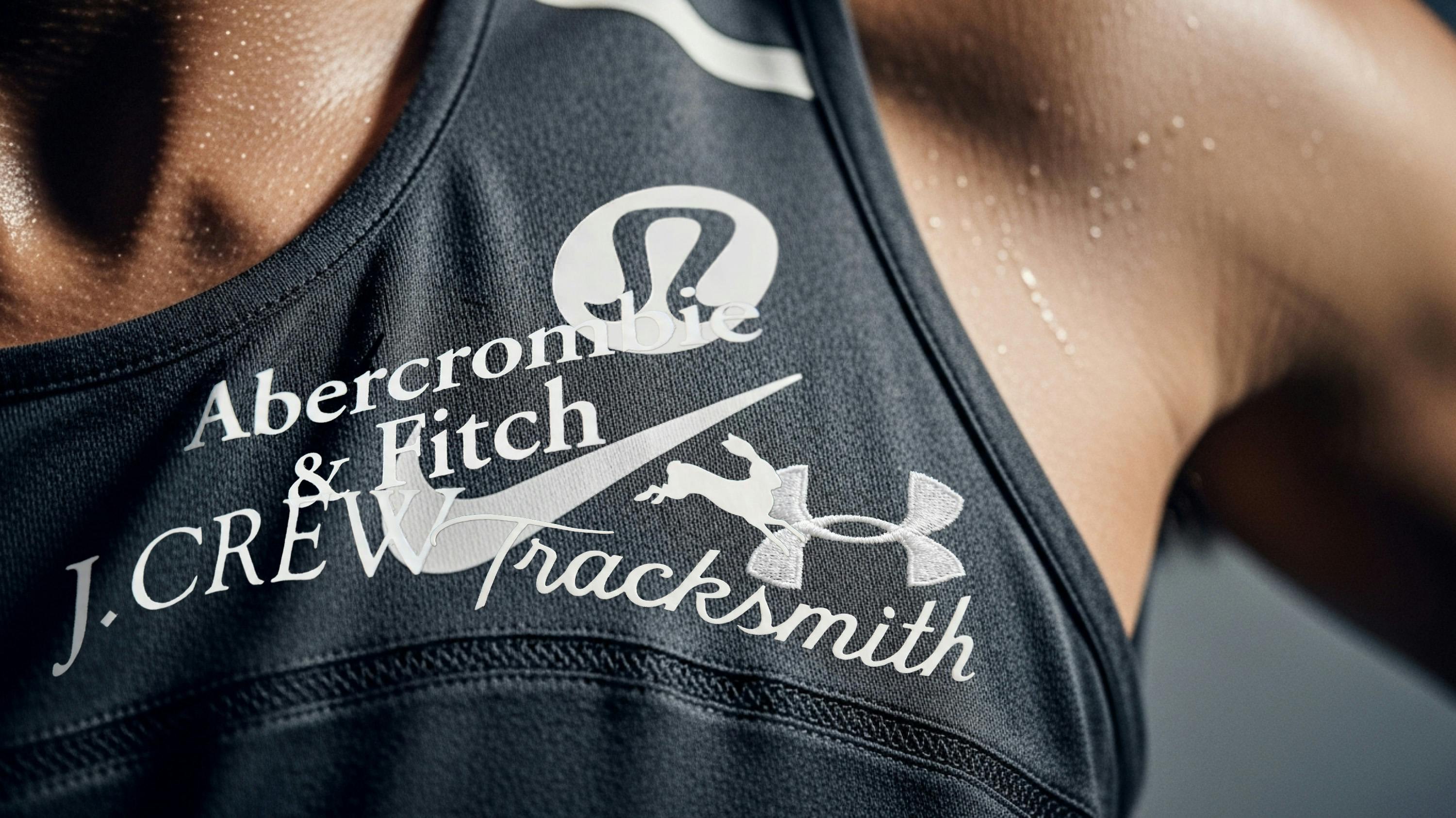 From Lululemon to Tracksmith, Sportswear Brands Face an Inflection Point
Retailers like Abercrombie & Fitch are getting into lifestyle sports apparel just as establishment brands Nike, Lululemon and Under Armour, best known for performance sportswear, each navigate varying stages of their own crises, our Sara Germano reports.
Abram Brown is the editor of The Information's Weekend section. You can reach him at [email protected] or find him on X.

Listening: “Fela Kuti: Fear No Man”
Granted, Fela Kuti, the long-dead father of Afrobeat, a West African style of funkish jazz, may not seem like the most obvious—or timely—subject for a lavish, 12-part biographical podcast. Host Jad Abumrad, the Radiolab creator, apparently realized that: so within the first few minutes of “Fela Kuti: Fear No Man,” he presents a series of testimonials about Kuti’s enduring greatness from everyone from Jay-Z to Paul McCartney to Barack Obama. The story zooms off from there.
Kuti died in 1997 after years of establishing himself as an aggressively counter-cultural force, who saw “music as a weapon” (his words), inspiring youth rebellions and younger musicians for decades. He relished an eccentric persona, one that involved nearly nude performances, a commune home that he viewed as an independent nation and marrying 27 women in a single ceremony.
Nearly 30 years after Kuti’s death, Abumrad is here to offer a fleet-footed reexamination of Kuti’s life and influence, embarking on a whirlwind journey across New York, London and Lagos, the cultural center of Kuti’s native Nigeria. He presents a study of revolutions—cultural, political, musical—and what can halt one from reaching its fullest potential.—Abram Brown
Reading: “The Breath of the Gods” by Simon Winchester
Much has been written about how the shape of history has flowed alongside the world’s great waterways: the Atlantic and Pacific oceans, the Great Lakes, the Nile and Yangtze rivers. Now, Simon Winchester, the venerable British historian, asks us to pick up our heads and notice another natural force that he thinks has shaped the world just as much: the wind.
“Wind is a familiar thing,” Winchester writes, “a thing whose very existence brings a kind of reassurance—yearned-for when absent, delighting when gentle, accursed when either biting cold or parching hot, feared when violent.”
Winchester’s attention begins with the world’s earliest civilizations, which relied greatly on the wind to sustain themselves and coined words to describe the wind as the earliest parts of their languages. (Many such groups, including the ancient Sumerians, had multiple words describing all sorts of different kinds of winds and a wind god—for the Sumerians, that was Ninlil.) With a good gale behind him, Winchester sweeps across the following centuries and into the present day, where he argues the wind has been just as consequential. Think about Chernobyl, for instance, where the Russians might’ve been able to hide the disaster’s consequences had the wind shifted direction.—A.B.
Watching: “Wake Up Dead Man”
Director Rian Johnson has gotten increasingly ambitious with his “Knives Out” franchise, which is headlined by Daniel Craig as hirsute sleuth Benoit Blanc, and he has returned with a third installment, “Wake Up Dead Man.” It’s a distinct improvement over the series’ second movie, the rather narratively overstuffed “Glass Onion,” presenting a more adept combination of sociopolitical commentary and twisty mystery.
In Blanc’s latest outing, the detective is beckoned to assist Father Jud (Josh O’Connor), the prime suspect in the murder of his parish colleague, Monsignor Jefferson Wicks (Josh Brolin). The web of characters and deceit extends much further—and onto the internet, giving Johnson a chance to send up small-town America’s fondness for conspiracy theories and the people who can weave them so effectively from a church pulpit or a voter-rally dais. He manages to do so with a funny, light touch. Left in someone else’s hands, the effort would’ve ended up reeking of too much frankincense and myrrh.—A.B.