
After the Crash and Scandal: Why Hyperliquid Looks Unstoppable
Crypto Black Friday’s record liquidations erased $19 billion in positions, exposing transparency gaps between centralized and decentralized venues. As Binance stumbled, Hyperliquid held firm, making the 10.10 crash crypto’s biggest stress test since FTX.
The crash and Binance’s recent listing controversy underscored one growing theme: the cost of centralization and the appeal of open systems.
The Crash That Shook TrustLatest Update
Bloomberg reported that Hyperliquid processed over $10 billion of the $19 billion in liquidations while Binance suffered outages and refunded users. The DEX maintained 100% uptime, proving its resilience during extreme volatility.
Background Context
Bitwise CIO Matt Hougan noted that blockchains “passed the stress test,” highlighting that DeFi venues like Hyperliquid, Uniswap, and Aave stayed operational while Binance had to compensate the traders. His conclusion: decentralization preserved market integrity as leveraged traders collapsed.
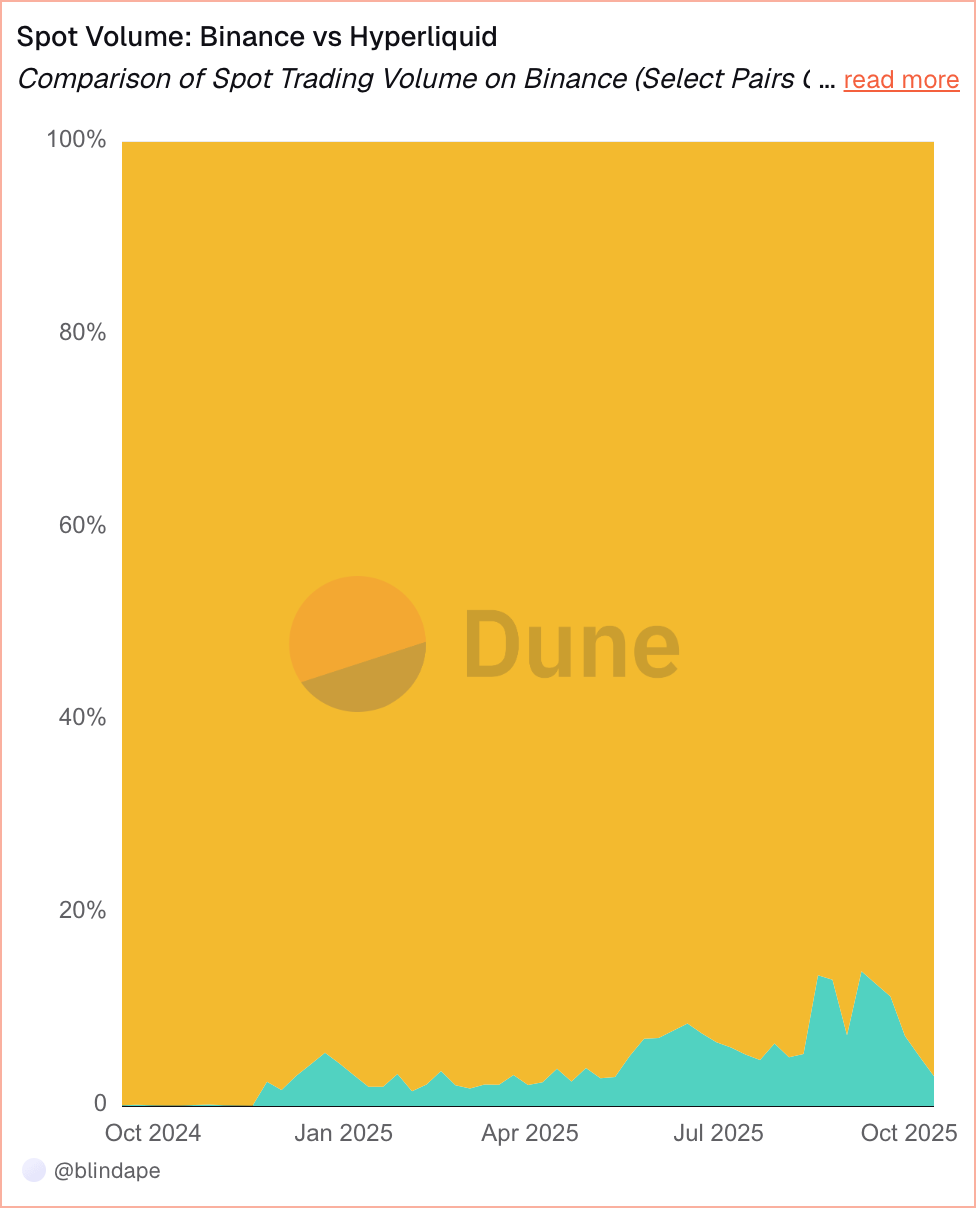 Spot Volume: Binance vs Hyperliquid | Dune
Dune data shows Binance dominates spot volume, while Hyperliquid’s share remains under 10% despite steady growth through mid-2025. The same trust gap that surfaced during the crash soon reappeared in a different form — the listing fee debate.
Binance Faces the Listing BacklashDeeper Analysis
Limitless Labs’ CEO alleged that Binance demanded 9% of the token supply and multimillion-dollar deposits for listings. Binance denied it, citing refundable deposits, and defended its Alpha program. The fairness debate erupted as CEX trust hit new lows.
Behind the Scenes
CZ argued exchanges follow different models and said, “If you dislike fees, build your own zero-fee platform.” Hyperliquid replied that on its network, “there is no listing fee, department, or gatekeepers.” Spot deployment is permissionless: any project can launch a token by paying gas in HYPE and earn up to half of trading fees on their pairs.
DEX and AMM have already ensured free listing, exchange, and liquidity for any asset
If a project is willing to pay high listing fees it’s for marketing, not market structure
Proud of the role we played in making this a reality