
4 Ways 2025 Has Changed the Crypto Markets Forever
The year 2025 has etched itself into the annals of financial history as the pivotal moment when crypto and digital assets transcended speculation and embedded themselves in the global economic fabric.
From boardrooms on Wall Street to policy chambers in Washington, digital assets have evolved from fringe experiments to indispensable tools for wealth preservation and innovation.
2025 Was Crypto’s Point of No Return—Here’s What Changed ForeverInstitutional giants poured billions into Bitcoin, corporations built digital treasuries as hedges against inflation, meme coins danced on the razor’s edge of euphoria and oblivion, and a pro-crypto administration dismantled regulatory barriers with landmark legislation, such as the GENIUS Act.
Drawing on extensive data and insights, this article examines how these forces converged to redefine markets. It explores how they attracted billions in new capital while exposing vulnerabilities in an ecosystem that is still finding its footing.
As BeInCrypto has chronicled throughout the year, these transformations signal not just growth, but a fundamental realignment of power in the financial sector.
Institutionalization of BitcoinThe institutionalization of Bitcoin in 2025 marked a watershed moment for crypto, transforming the volatile asset into a cornerstone of diversified portfolios.
Spot ETFs matured quickly, with BlackRock’s IBIT ETF amassing nearly $68 billion in assets under management (AUM), dominating daily volumes and attracting the majority of inflows.
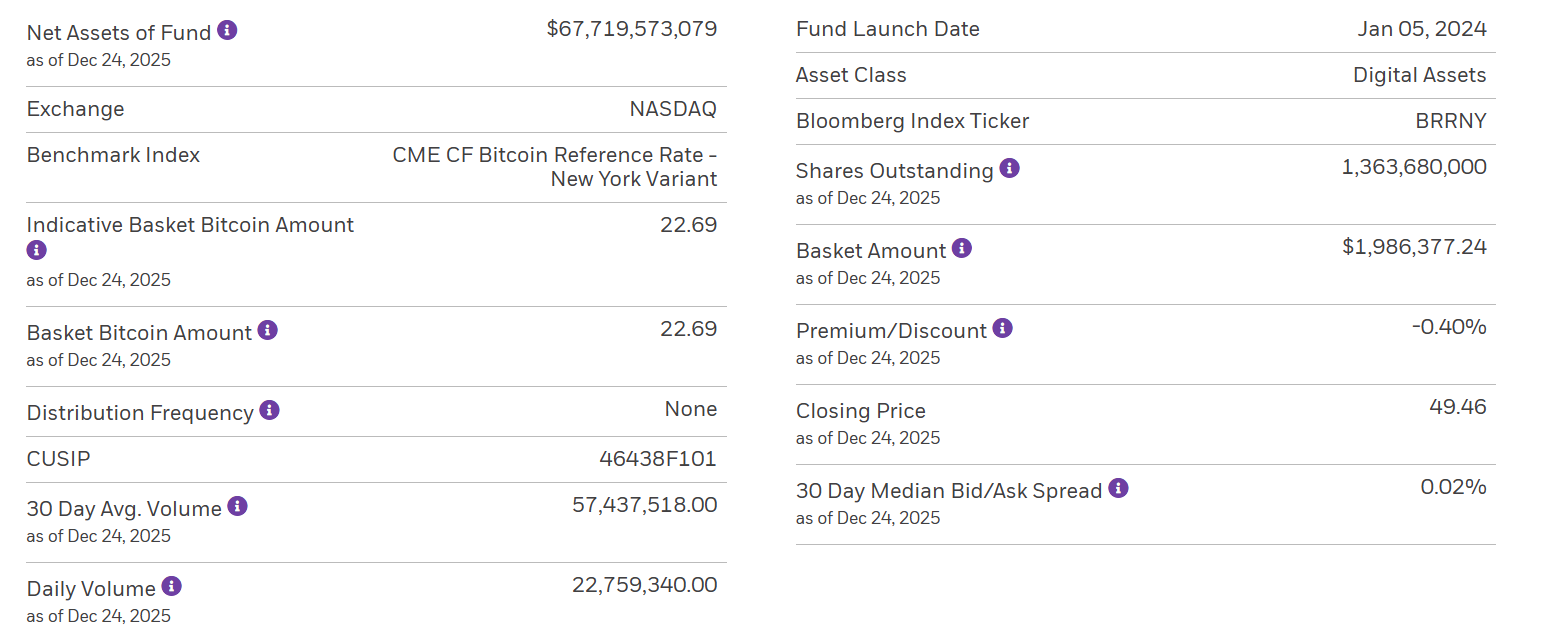 Key Facts of iShares Bitcoin Trust ETF. Source: BlackRock
Institutional AUM in Bitcoin surged to $235 billion, a 161% leap from 2024, fueled by pension funds overseeing $12 trillion in assets entering the fray for the first time.
This AUM is achieved by measuring the sum of holdings between private companies, public companies, exchanges or custodians and ETFs, multiplied by the Bitcoin price.
 Distribution of BTC over time. Source: Bitcoin Treasuries
Projections from Bursera Capital indicated inflows exceeding $40 billion, surpassing the previous year’s record, as fair-value accounting rules mitigated balance sheet volatility. This allowed corporations to hold BTC without punitive mark-to-market losses.
Regulatory clarity played a starring role, with the US establishing a strategic Bitcoin reserve and lifting restrictions on retirement plans.
2025 has clearly solved the access problem for institutions to allocate into Bitcoin.
These were the five major structural obstacles that came down this year:
▫️ Spot ETFs securitized Bitcoin
▫️ Options markets formed around ETFs
▫️ Prior regulatory restrictions in retirement…
By mid-December, 14 of the top 25 US banks were developing Bitcoin products. This is according to Bitcoin financial services firm River. Meanwhile, asset managers maintained net long positions even during market dips.
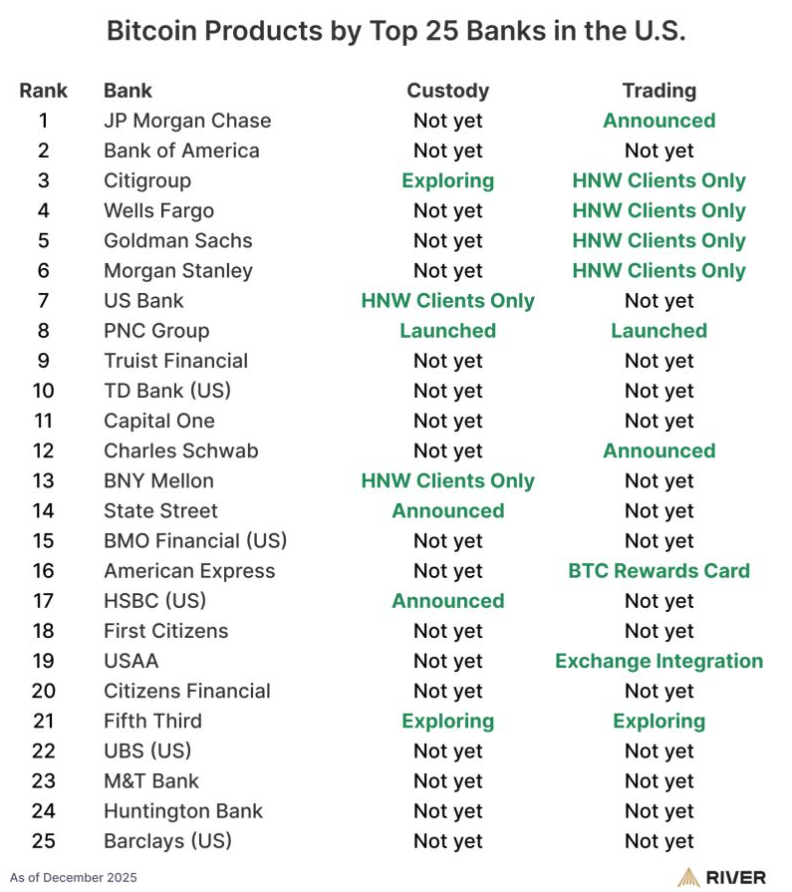 Bitcoin Products by Top US Banks. Source: River
An EY survey conducted earlier in the year revealed that 86% of institutional investors plan to increase their crypto holdings. DeFi exposure expected to triple from 24% to 75%. It emphasized yield generation through lending and derivatives on secure platforms, such as Fireblocks.
Data on Newhedge shows Bitcoin’s 30-day volatility dipped 70%, from a 2025 high of 3.81% to depths as low as 1.36% in August. This rendered it calmer than some traditional equities, while prices climbed from the $76,000 range to top out $126,000.
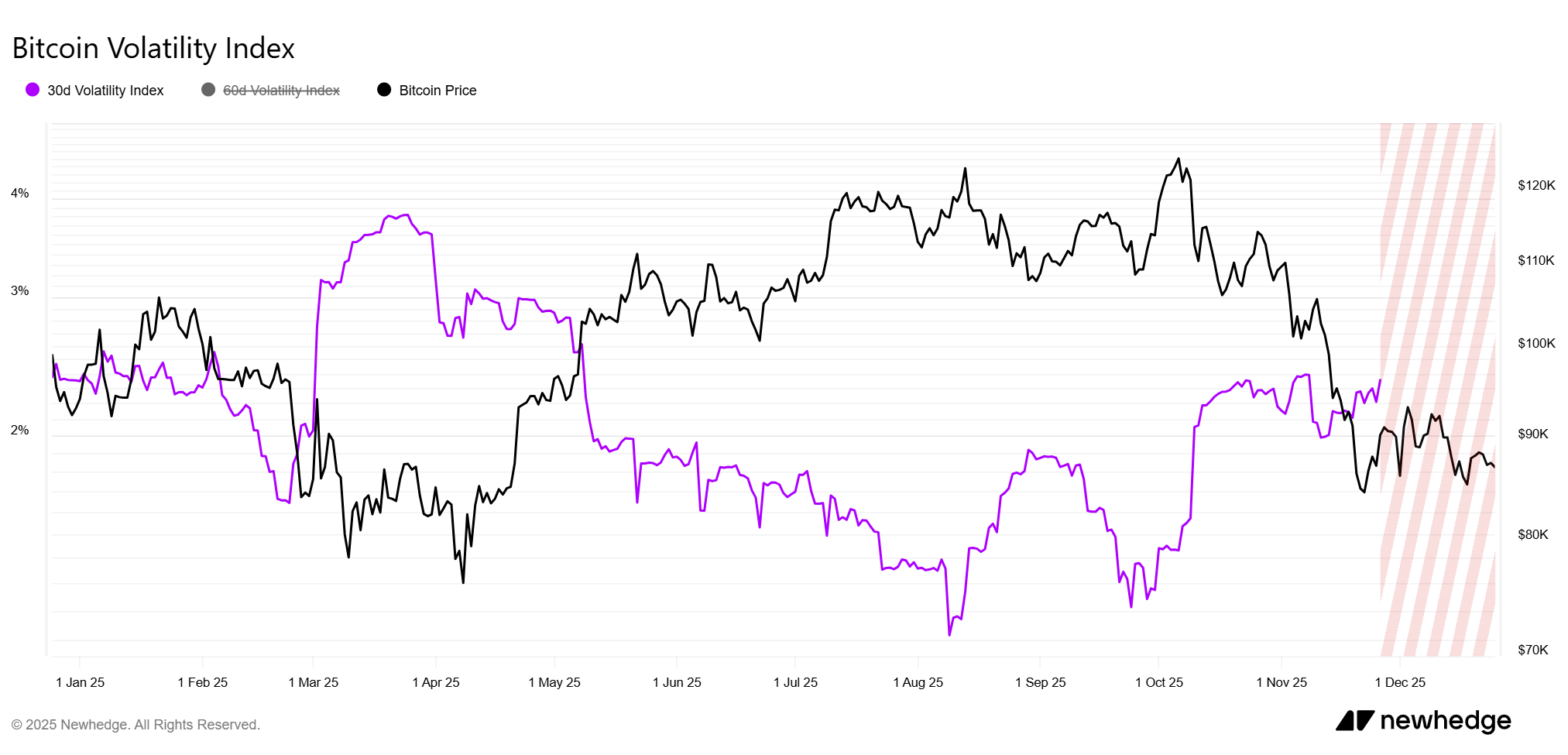 Bitcoin 30-day Volatility Index and Price Performance. Source: Newhedge
Analysts at firms like Standard Chartered anticipated pension-driven demand shocks, where each $1 billion in ETF inflows could propel prices higher.
According to blockchain intelligence firm Arkham, corporate Bitcoin holdings were under 600,000 BTC at the start of ,2025 but institutional interest has ramped up this year. Now, corporations hold over 4.7% of the total BTC supply.
Against this backdrop, believers like Michael Saylor of MicroStrategy say Bitcoin is no longer fringe. Rather, it is financial infrastructure. This observation echoes the sentiment at the Bitcoin 2025 Conference, where the US Vice President JD Vance’s BTC ownership and Pakistan’s national reserve were highlighted.
Bitcoin 2025 Conference just changed the game