2025: The Year Status Quo Stopped Working.
Open these pages as you would open a door to a room where the future is already arguing with the present.
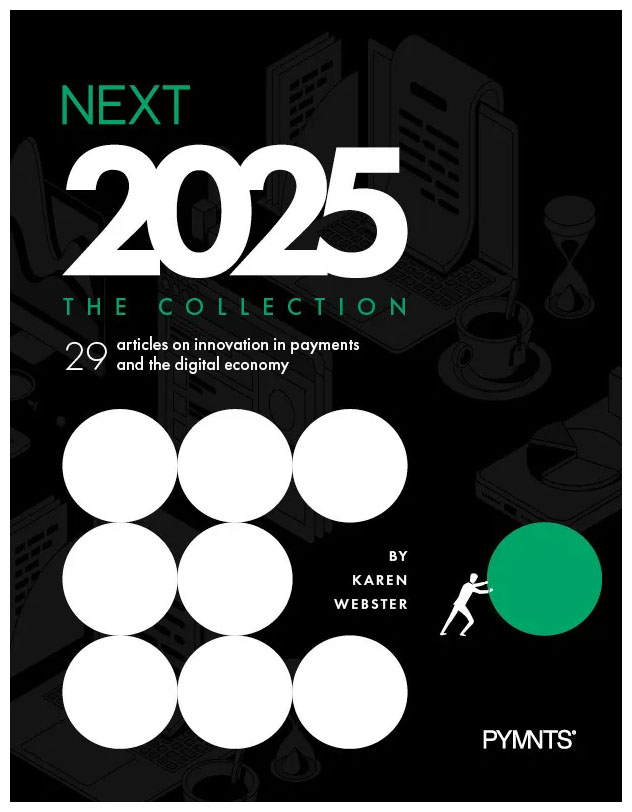 My 2025 columns were not written to soothe, flatter or follow consensus. They were written to challenge assumptions, stress-test narratives, and force uncomfortable conversations about where money, technology and power are actually heading.
This collection is an invitation to engage with that friction. It’s an opportunity to read, disagree, reconsider and, above all, think forward.
A Clear-Eyed View of the Connected EconomyFor more than a decade, my writings have focused on observing the connected economy with rigor and intent.
As the founder and CEO of PYMNTS, I’ve built a platform at the intersection of payments, commerce, data, platforms and policy. My work is grounded in data, sharpened by conversations with the executives who run the systems that move money and informed by a deep understanding of how incentives shape behavior across consumers, enterprises and institutions.
What defines my approach is not access or experience alone, but analysis supported by frameworks. I don’t merely chronicle change; I interrogate it.
The Year AI Stopped Being AbstractIn 2025, that interrogation focused overwhelmingly on the most disruptive force to hit the digital economy in generations: artificial intelligence. Not AI as a feature or a tool, but AI as an actor.
Throughout the year, I tracked the shift from generative AI that assists humans to agentic AI that acts on their behalf. Across columns on search, checkout, wallets, ROI and department stores, a consistent argument emerged. When software gains agency, every business model built on attention, clicks or manual choice is up for renegotiation.
In one of my most debated columns on AI agents and commerce, I wrote: “When agents can decide, transact and optimize without waiting for permission, the battleground moves from interfaces to intent. The winners won’t own the screen. They’ll own the outcome.”
That assertion cut against years of platform orthodoxy and sparked debate across banking, retail and payments about who, exactly, controls the transaction when humans step back.
Beyond AI: Platforms, People and CreditThis book is not a monograph on AI. Even as artificial intelligence dominated the headlines, I kept returning to the structural forces shaping the economy beneath the hype. I wrote about why platforms continue to define the connected economy more than a decade on. I challenged generational shorthand, arguing that Gen Z isn’t “different,” but digital by default. I examined the paycheck-to-paycheck consumer with nuance, resisting caricature in favor of data.
My columns on buy now, pay later were among the most contrarian. At a moment when BNPL was alternately hailed as a lifeline or condemned as a debt trap, I reframed the discussion. In “The BNPL Story Everyone’s Getting Wrong,” I wrote: “This isn’t a credit revolution. It’s a debit mindset applied at the wrong moment, by products designed for yesterday’s risk models.”
The point was not to dismiss BNPL, but to force a harder look at how credit is evolving and who it truly serves.
A Weekly Conversation That ContinuesRead together, these columns map a year when I wrote that time became an asset class, trust emerged as data’s only real currency, and the payments business model entered a period of creative destruction and rebuild.
They also reflect a rhythm familiar to thousands of readers: my voice landing every Tuesday on LinkedIn and every Wednesday in PYMNTS.
This book captures that cadence. More importantly, it preserves a year of thinking intended to shape many more to come.
Thanks so much for reading and for being part of the debate.
The post 2025: The Year Status Quo Stopped Working. appeared first on PYMNTS.com.